REVIEW · SAN DIEGO
San Diego: 3 Hour Whale Watching Cruise
Book on GetYourGuide →Operated by Legacy Whale Watch · Bookable on GetYourGuide
San Diego’s ocean is wild and busy, and this cruise is built to help you read it. I like that you’re aiming for La Jolla Canyon, a real wildlife zone, not just a random open-water cruise. I also like the practical setup: a modern 80-foot fiberglass boat with indoor and outdoor decks plus a bar, so you’re comfortable even if the ocean has other plans. One thing to consider: it’s not a match if you’re prone to seasickness.
You’ll be out for three hours, moving through prime viewing waters as the seasons shift. The goal is clear—spot whales, dolphins, and sea lions—and the crew works the search with guidance on what you’re looking at. Still, whale sightings are never guaranteed by nature, so bundle your day with flexible expectations.
In This Review
- Key Things I’d Pay Attention To
- Mission Bay to La Jolla Canyon: the route that actually matters
- A note on the day’s conditions
- Species by season: when the odds tilt in your favor
- November to April: California gray whales
- May to October: summer chances for blue whales and other species
- Dolphins, sea lions, and birds: the good news all year
- The 80-foot boat: comfort that helps you stay focused
- If you’re sensitive to motion
- The onboard wildlife education: practical, not preachy
- How the three hours actually feel on the water
- Cold is the sneaky problem
- Whale guarantee: what it means for your risk tolerance
- Who should book this cruise (and who should skip)
- Skip it if:
- Price and value: $34 for a lot of boat time
- Getting there: Mission Bay parking at 1717 Quivira Rd
- Should you book Legacy Whale Watch?
- FAQ
- FAQ
- How long is the whale watching cruise?
- What does it cost?
- Where do I park and meet?
- Where does the cruise go?
- What whales can I see, and when?
- What other animals might I spot besides whales?
- What should I bring?
- Is this tour good if I get seasick?
- What happens if no whales are spotted?
Key Things I’d Pay Attention To
- La Jolla Canyon waters: a focused route for spotting migrating and resident wildlife
- Two-deck, 80-foot fiberglass boat: big windows, indoor shelter, and outside viewing at the bow
- Seasonal species odds: gray whales Nov/Dec–April; blue whales in summer; other species May–Oct
- Onboard wildlife education: natural history folks and crew interpret what you spot
- Whale guarantee: a free ride if no whales are seen, plus some trips include return-trip discounts
- Practical comfort: a bar, snacks and beverages, and three full-sized bathrooms onboard
Mission Bay to La Jolla Canyon: the route that actually matters
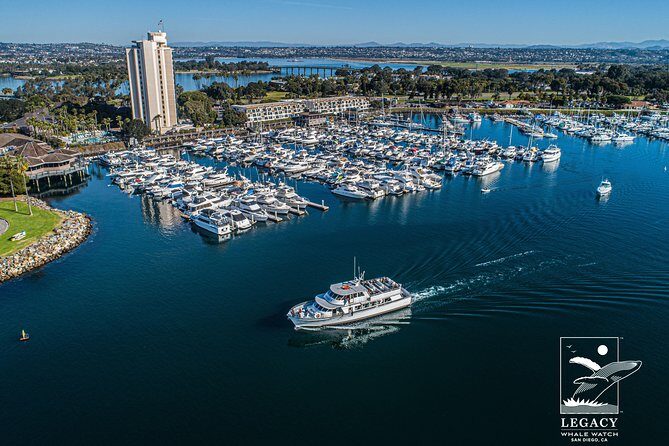
This cruise starts from Legacy Whale Watch out of Mission Bay, then heads toward La Jolla Canyon. That matters, because whales and dolphins don’t hang out politely where tourism boats want them—they move based on food, temperature, and migration timing. When a company points you toward a known wildlife corridor, your chances feel more grounded.
Mission Bay is also a solid starting point because it’s a working recreational bay. You’re not scrambling through a sketchy pier or far-flung access point. Once you’re out, the experience turns into a steady watch-and-learn routine: scanning the water, checking the horizon, then listening for cues from the crew.
I also like the boat’s viewing approach. You’re not stuck staring through one tiny window. With two decks and lots of glass, you can rotate positions as the light changes. In the real world, that can be the difference between spotting a spout at the edge of vision and missing it entirely.
Other San Diego tours we've reviewed in San Diego



A note on the day’s conditions
San Diego can feel mild on land and cooler at sea, especially with wind off the water. Even if you do everything right, the ocean can still be choppy some days. The boat is described as modern and stable, but if you’re sensitive to motion, plan accordingly.
Species by season: when the odds tilt in your favor
One of the best parts of this tour is that it’s not pretending every month is the same. The route and wildlife focus shift with the calendar, and the messaging is straightforward.
November to April: California gray whales
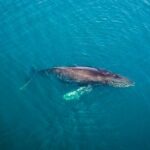
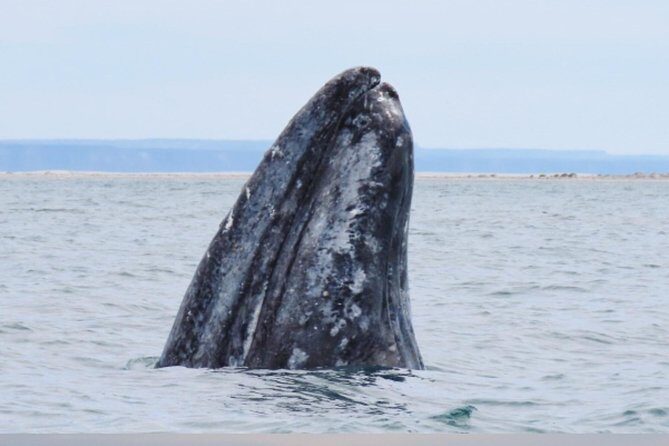
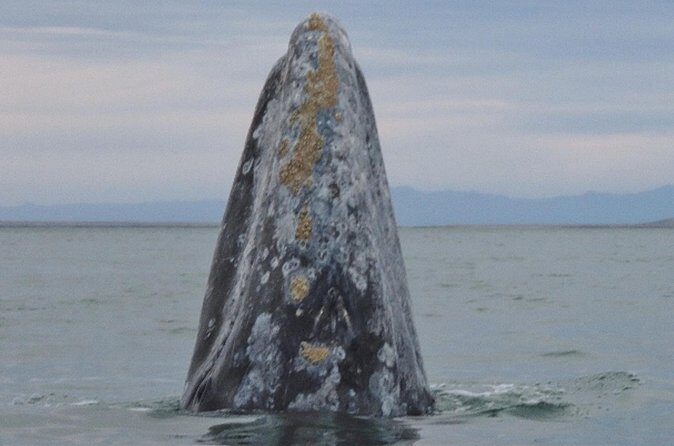
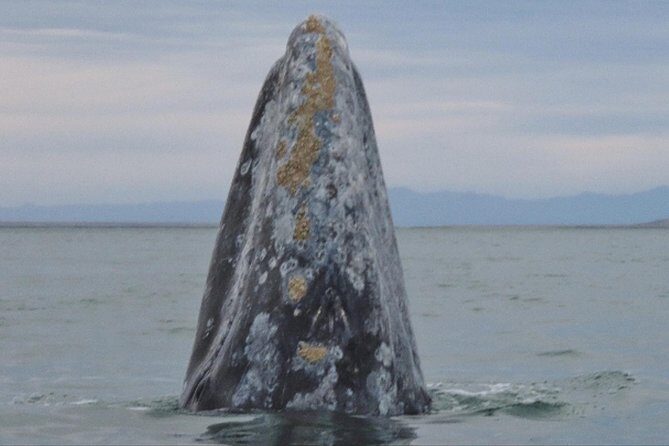
From November to April, the standout is the California gray whale. This is when you’re watching a slice of a migration that’s famous for covering more than 5,000 miles—from feeding waters near the Bering/Chukchi Seas down toward Baja California lagoons. The cruise description notes that more than 20,000 gray whales make this journey annually, and during this season you’re in the window when people most expect to see them.
If gray whales are your top target, these months tend to be your best bet. And even when sightings aren’t constant, the search effort often stays intense because the crew is looking for the specific rhythm of whales surfacing and moving through the area.
May to October: summer chances for blue whales and other species
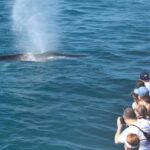
In summer, when water temperatures rise, your odds improve for blue whales. May to October is also described as a good period for spotting fin whales, humpback whales, and minke whales.
In other words: if you’re coming outside the gray whale season, you’re not hunting one species. You’re letting the crew’s eyes and your own scanning catch what’s showing up that day.
Other whale watching tours we've reviewed in San Diego
Dolphins, sea lions, and birds: the good news all year
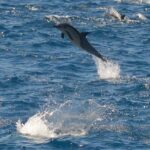
Even when whale sightings are slower, the cruise isn’t empty. You can watch for dolphins and porpoises, plus California sea lions that you might spot during the trip. Birds are also part of the mix, especially when they’re using the same air-and-water space where marine life is feeding.
This is why the best mindset is not whale-only tunnel vision. I find it’s more fun—and more rewarding—to treat every pod and every surfacing event as part of the story, not a consolation prize.
The 80-foot boat: comfort that helps you stay focused
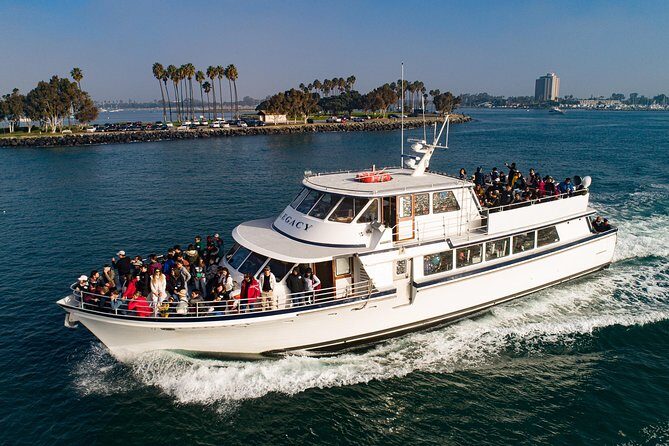
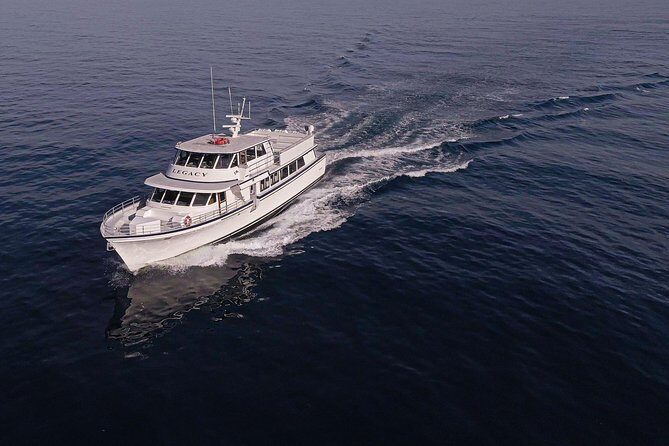
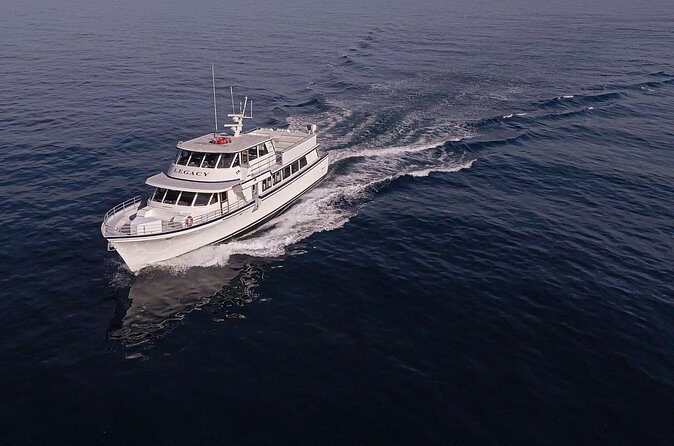
This is an 80-foot fiberglass boat with two decks and ample seating, designed for comfort on real ocean time. The windows throughout both decks matter because your eyes don’t have to fight glare or reposition constantly just to keep scanning.
Here’s what I’d call the practical upgrades:
- Indoor seating: described as covered and accommodating over 100 passengers, which helps if wind or mist shows up
- Outdoor viewing: bow seating and elevated upper deck space for horizon watching
- Clean, full-sized restrooms: three bathrooms onboard
- Bar access: snacks and beverages so you’re not stuck waiting for land again
If you hate wasting vacation energy on being cold, cramped, or stuck, these details pay off fast. It’s easier to stay engaged with the search when you’re comfortable enough to watch for that one spout you’d otherwise miss.
If you’re sensitive to motion
The tour is noted as not suitable for people prone to seasickness. Even with a stable boat, motion can still be a factor for some people. If that’s you, consider passing or asking a doctor what’s appropriate for your situation before you go.
And yes—one rider noted the ride can be slightly bouncy. That’s not unusual on an ocean cruise, so it’s smart to pack like you might be colder than you expect.
The onboard wildlife education: practical, not preachy
The cruise leans into interpretation. You’re not just handed a brochure and sent out to guess what you’re looking at.
You’ll learn from a knowledgeable captain and crew, plus additional wildlife education while you’re out. The format can include members associated with natural history groups and environmental volunteers who share facts and help you connect animal behavior to what you’re seeing.
I like this approach because it turns random sightings into understanding. For example, once you know what to look for—spout patterns, surfacing behavior, and the way dolphins often move around food—it gets easier to spot the good stuff quickly.
One small drawback to watch for: sound quality can depend on where you sit. A rider mentioned that audio at the back of the boat wasn’t easy to hear. If you care about the talk, aim for a seat where you can hear without craning.
How the three hours actually feel on the water
You’ll spend about three hours out on the ocean. The flow usually feels like this: settle in, start scanning, react to sightings quickly, then get told what the crew is noticing.
The crew’s job is to watch the water like a map—tracking movement and positioning so you’re not just drifting while everyone stares. On trips where wildlife is active, the experience speeds up: pods of dolphins can pop up repeatedly, sea lions can appear where you least expect, and whales—when present—often come in multiple surfacing events rather than one quick look.
You might also find that the most memorable moments come from the “in-between” time. When you’re not staring at one big whale, you’re noticing dolphins riding the wake, birds reacting to feeding, and the way the sea changes texture when something is beneath the surface.
That’s why I like the two-deck setup. You can shift your angle. If the sun is in one direction, you can move to a better viewing side without giving up your spot.
Cold is the sneaky problem
The tour strongly recommends warm clothing and layers. Even if you start the day in shorts, sea air can change the feel fast once you’re cruising for three hours. Bring a hat and sunscreen anyway—sun and wind can both show up, just on different schedules.
Whale guarantee: what it means for your risk tolerance
This cruise includes a whale guarantee. The promise is simple: if no whales are spotted, you receive a free ride.
That’s valuable because whale watching is a high-variance activity. Nature doesn’t care about your schedule, your camera, or your hopes. A guarantee turns that risk into something more manageable.
Also, the real-world compensation can be a little more flexible than just a free return. Some outings have included a discount coupon for a future tour when whales weren’t spotted. That lines up with what I like to see: companies treating a missed-peak day as a customer service moment, not a shrug-and-go situation.
Bottom line: you’re not just buying a ticket to look. You’re buying into a system meant to reduce disappointment.
Who should book this cruise (and who should skip)
This tour is a great fit if you want:
- A comfort-first whale watching experience with indoor shelter and lots of viewing space
- A cruise where you’ll get hands-on wildlife interpretation while scanning
- A three-hour outing that’s long enough to feel like an experience, not a half-hour tacked-on ride
It’s also a strong choice for families and groups because the boat setup supports different comfort levels. Some people want the wind and horizon; others prefer indoor seating until the action starts.
Skip it if:
- You’re prone to seasickness. The tour explicitly notes it’s not suitable for that situation.
- You need total quiet and zero sound dependence. There’s live guiding, and audio clarity can vary depending on where you sit.
Price and value: $34 for a lot of boat time
At $34 per person for a three-hour cruise, I think this is positioned as good value if you care about comfort and a decent chance of wildlife viewing.
Why? Because the ticket isn’t just about getting on a boat. You’re also paying for:
- A modern, stable platform with indoor and outdoor decks
- A bar with snacks and beverages
- Three full-sized bathrooms, which sounds minor until you’re actually on a long boat day
- Time with wildlife education so you get more from what you spot
If whales are your top mission, the seasonal odds matter. If you’re coming during gray whale season, your focus feels aligned with the timing. If you’re coming in summer, you know that blue whale chances rise. If you’re coming in shoulder months, you’re still likely to see dolphins, sea lions, and birds, which keeps the outing satisfying even on low-whale days.
Getting there: Mission Bay parking at 1717 Quivira Rd
Meeting point parking is at 1717 Quivira Rd, San Diego, CA 92109. The good news: there’s ample parking in their lot.
The important caution is the neighbor lots. The guidance is clear that nearby businesses may tow aggressively, and you should not park in Seaforth Boat Rentals, Seaforth Marina, or Marina Village parking areas. If you want a smooth start, stick with the recommended lot at 1717 Quivira Rd or designated parking along Quivira Rd.
This matters because whale watching has a time rhythm. You don’t want your morning to turn into a parking scavenger hunt.
Should you book Legacy Whale Watch?
I’d book this cruise if you want a practical, comfortable whale watching outing with real wildlife focus and onboard education. The boat setup is a big deal for day comfort, and the three-hour length gives the crew time to search instead of rushing you out.
Book especially if you’re coming during:
- Nov to April for California gray whales
- Summer for the best blue whale odds
- May to October for fin, humpback, and minke whale chances
I’d reconsider if you’re very seasick-prone, or if you’re expecting whale sightings to be guaranteed. The guarantee helps, but it can’t control what the ocean decides to show that day.
FAQ
FAQ
How long is the whale watching cruise?
It’s a 3-hour whale watching tour.
What does it cost?
The price is $34 per person.
Where do I park and meet?
Park at 1717 Quivira Rd, San Diego, CA 92109. The recommended parking is in their lot; avoid nearby lots that risk towing.
Where does the cruise go?
It sails from Mission Bay toward La Jolla Canyon.
What whales can I see, and when?
For November to April, you’re focused on California gray whales. In summer, there’s a better chance of blue whales, and May to October generally offers good chances for fin, humpback, and minke whales.
What other animals might I spot besides whales?
You may see dolphins and porpoises, sea lions, and birds.
What should I bring?
Bring warm clothing (layers), a hat, a camera, sunscreen, and binoculars.
Is this tour good if I get seasick?
It’s not suitable for people prone to seasickness.
What happens if no whales are spotted?
The tour includes a whale guarantee and you receive a free ride if no whales are spotted.