REVIEW · SAN DIEGO
Pies & Pickaxes: A Historic Walking Tour of Julian, CA
Book on Viator →Operated by Drives & Detours · Bookable on Viator
Julian’s past is easiest on foot.
This Pies & Pickaxes walking tour strings together historic buildings and short, story-filled stops that help you see Julian with fresh eyes, even if you’ve been through town before. You’re paying $7.99 per person for a walk that runs about 1 to 2 hours, using a mobile ticket and downloadable content so you can follow along at your own pace.
My two favorite parts are how quickly it gets you oriented and how specific the stories feel at each stop. You start at the right spot on Main Street, then you’re guided to real landmarks tied to Julian’s shift from mining to orchards. One thing to consider: some stops are brief and a couple spots involve short climbs, so comfy shoes and a little patience with quick photo stops will make the whole route more enjoyable.
In This Review
- Key Highlights You’ll Actually Feel
- Walking the Julian Story Trail, Stop by Stop
- Price and Time: What $7.99 Buys You in Julian
- Starting at 2315 Main St: Bailey House and the Founder’s Punchlines
- Julian Cemetery Hill: Views Plus the Names That Came First
- Julian Pie Company: When Apple Orchards Took Over
- Historic Merchants at Julian Market & Deli (Jacoby Building)
- Miner’s Diner and Jack’s Grocery: Brick, Backcountry, and Immigration
- The Wilcox Building Wheelbarrow: A Surveyor’s Tool and County-Scale Thinking
- Julian Gold Rush Hotel: The Oldest Continually-Operating Hotel in Southern California
- Julian Jail and the Restored Schoolhouse: What the Town Built for Control and Learning
- Ending at Julian Museum and Pioneer County Park: Where the Stories Gain Context
- Views, Food, and the Right Kind of Short: Who This Tour Fits
- Should You Book Pies & Pickaxes?
- FAQ
- How long does the Pies & Pickaxes walking tour take?
- How much does it cost?
- What do I need to access the tour content?
- Where do I start and where does the tour end?
- Is the tour offered in English?
- Are there admission costs at the stops?
- Are kids allowed, and do they pay?
- What is the cancellation policy?
Key Highlights You’ll Actually Feel
- A tight 1 to 2 hour loop that helps you get your bearings fast in Julian
- Stop-by-stop storytelling tied to named locals and specific buildings
- Great views from the hill at Julian Cemetery
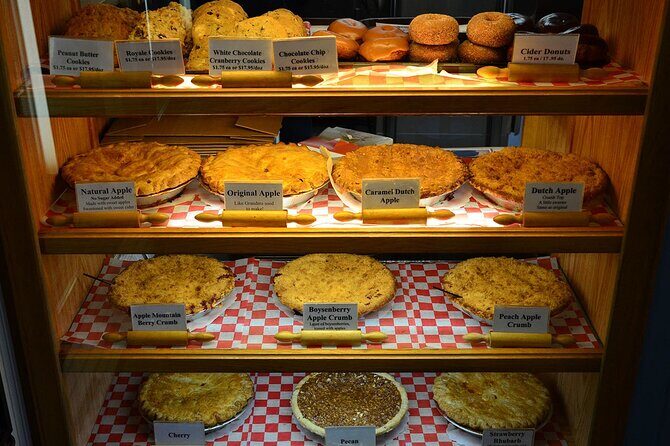
- Food is part of the plan at Julian Pie Company, where you can grab a slice or donut
- You end at the Julian Museum and Pioneer County Park, so the walk naturally turns into more time to explore
Walking the Julian Story Trail, Stop by Stop
This tour is built for people who want more than a quick drive-by of Main Street. Instead of treating Julian like a scenery backdrop, it points you to the exact places where early residents lived, worked, and left behind clues about how the town became what it is now.
The pacing is small-chunk friendly. Most stops are designed to take around 5 minutes, which is great if you like brisk sightseeing. If you’re the type who stops for extra photos and wants a long sit-down at every location, you’ll still be fine, but you’ll probably add time on your own at the parts that hook you.
And there’s a smart practical twist: the tour content is available through an app download with a mobile ticket, and you get unlimited access within 30 days. That means you can redo it if you want to linger, or if you want to come back after you’ve had a look around town on your own.
Other walking tours we've reviewed in San Diego



Price and Time: What $7.99 Buys You in Julian
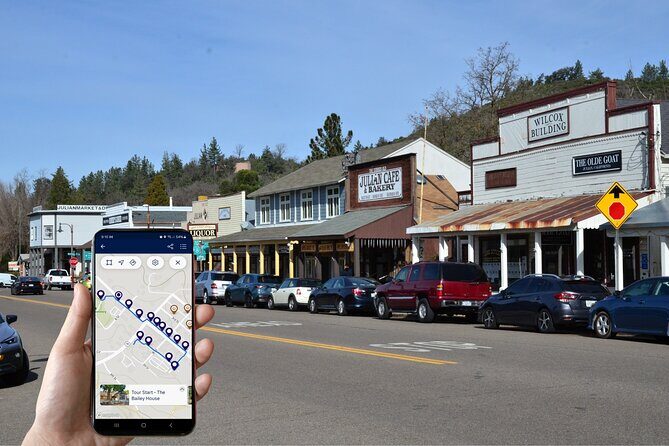
At $7.99 per person, this is the kind of activity that works as a first-day anchor. You’re not just buying a viewpoint or a one-off photo moment. You’re paying for a linked route of landmarks, each with a short explanation—so your walk turns into something you can remember later.
You’ll likely finish in about 1 to 2 hours. That makes it a nice match for a morning start or an afternoon reset when you still want to save energy for the rest of your day (dinner, a hike outside town, or just wandering Main Street).
What you’re not paying for is any included transportation. This is walkable, but you’ll need to get yourself to the starting point at 2315 Main St, Julian.
Starting at 2315 Main St: Bailey House and the Founder’s Punchlines
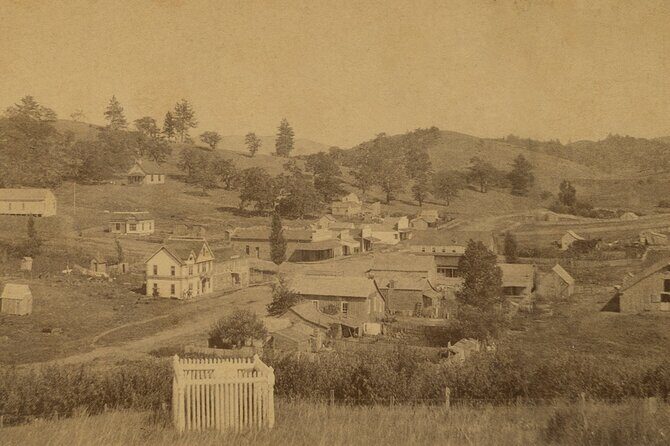
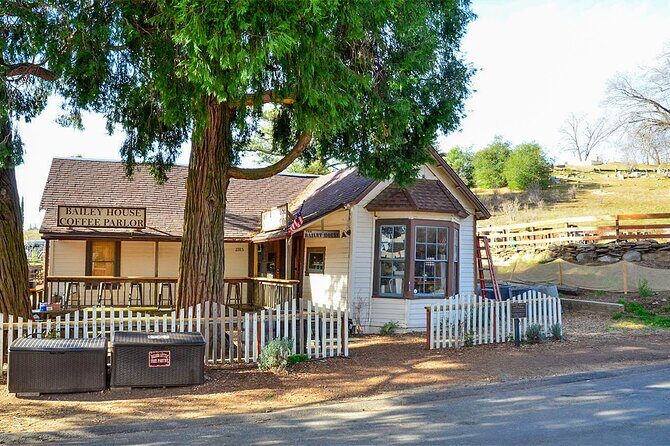
You begin at 2315 Main St, and the first stop sets the tone: Bailey House. It’s tied to Drue Bailey, described as the founder of Julian. The story here isn’t just dates and facts. You also hear a funny account about one of the pranks he pulled in town.
That blend matters. When an early pioneer story includes something human—like mischief—it makes the rest of the town feel less like a museum display and more like a place built by people with opinions, energy, and maybe the occasional questionable decision.
Practical tip: since the stops move fast, this is a good moment to look up and down Main Street. I’d use the first minute to orient yourself, so you’re not walking the next stretch trying to remember which direction comes next.
Julian Cemetery Hill: Views Plus the Names That Came First
Next you head to Julian Cemetery, where you climb a hill for an elevated view of town. Even if you’re not a big cemetery person, the payoff here is twofold: the view and the chance to connect with Julian’s earliest residents through what you can see on the graves.
This is also a good reminder that early Julian lived with gravity and elevation. The fact that this hill gives you a bird’s-eye perspective helps you understand how the town sits in relation to its surroundings.
Consideration: it’s short, but it is a hill. If you’re visiting in heat or you’re mobility-limited, plan for a slower pace at this stop and take it easy.
Julian Pie Company: When Apple Orchards Took Over
Then comes the food stop at Julian Pie Company. Here you get a story about how Julian’s early residents helped transform the town from a mining focus to apple orchards. The point isn’t abstract economics—it’s how people adapted to what the land and the market offered.
After the story, you can stop in for something concrete: a slice of apple pie or an apple cider donut. This is one of those moments where the tour’s theme stops being a slogan and becomes a real treat you can eat while the story is still fresh.
This is also a smart place to decide your energy level. If you want to keep moving, you can grab something fast and continue. If you want a breather, the tour’s pacing still works, because you’re not far from the next historic storefronts.
Other historical tours in San Diego






Historic Merchants at Julian Market & Deli (Jacoby Building)
The tour moves from food to commerce with Julian Market & Deli. You stop in front of a historic mercantile building known as the Jacoby building, and the theme shifts again: from what people grew to how they made a living selling, trading, and serving the town.
This kind of stop is valuable because it explains everyday systems. Mining brought people in, but merchants helped keep them supplied. You start to see how the town kept functioning as its main identity changed.
Practical tip: take a quick look at the building’s details before the tour explanation ends. Even if you don’t notice everything, you’ll usually catch the difference between a plain storefront and one that’s older enough to feel like part of the town’s bones.
Miner’s Diner and Jack’s Grocery: Brick, Backcountry, and Immigration
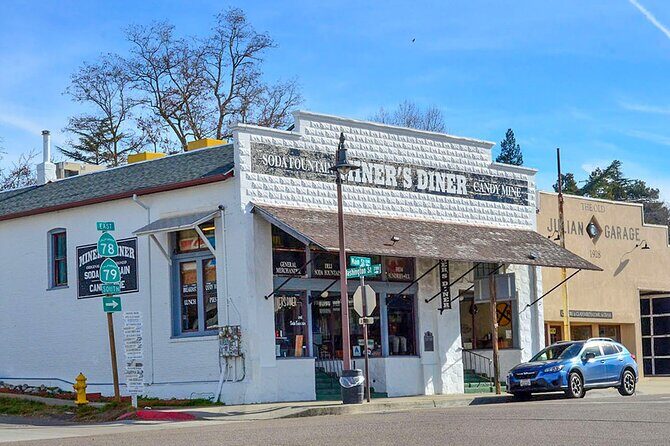
On Main Street you’ll find Miner’s Diner, where you see another historic building and hear that it was the first in the backcountry built of brick. That’s a big deal for understanding what “progress” looked like back then. Brick wasn’t just a style choice; it signaled stability and staying power in an environment where many things were more temporary.
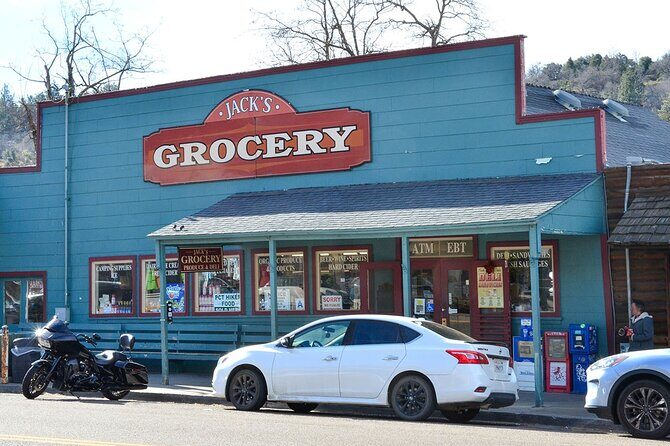
Then the tour heads to Jack’s Grocery. This stop focuses on an Italian immigrant named Frank De Luca, who moved to Julian and started a grocery store. The story here adds an important layer: towns aren’t only built by those who arrived for one job. They’re built by newcomers who opened businesses and created long-term community roots.
Why I like this pairing: brick construction tells one kind of story (infrastructure), while a grocery store tells another (daily life and who served the community). Together, they help you picture Julian as lived-in, not just photographed.
The Wilcox Building Wheelbarrow: A Surveyor’s Tool and County-Scale Thinking
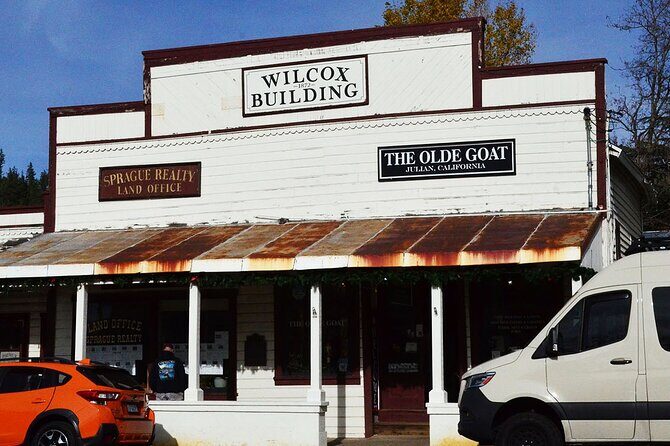
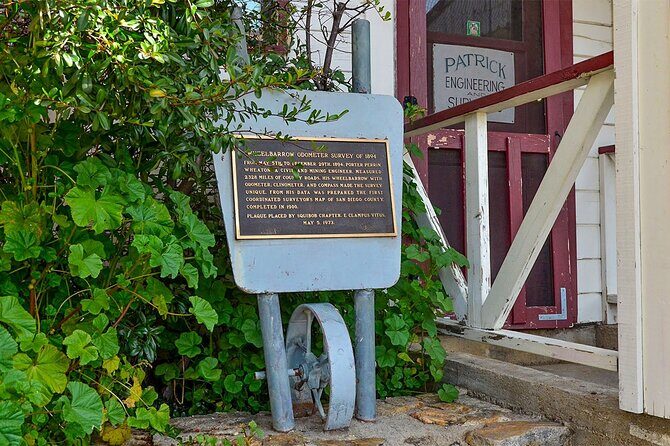
Next is the Wilcox Building, where you’ll see a wheelbarrow that Porter Perrin Wheaton used to survey 2328 miles of county roads in 1900. That detail is one of the most unexpectedly “big picture” moments on the route.
It’s also a great contrast to the earlier stops that feel very local and personal. This one quietly shows you that a small town’s story connects to regional development. Roads, maps, and surveys turn hills and ranch land into something people can navigate with purpose.
If you enjoy quirky artifacts, don’t rush this stop. A wheelbarrow used for surveying isn’t the kind of thing you usually see tied to a single place you can stand in front of.
Julian Gold Rush Hotel: The Oldest Continually-Operating Hotel in Southern California
At Julian Gold Rush Hotel, the tour shifts into a story that’s both dramatic and specific. You learn it’s the oldest continually-operating hotel in Southern California. You also hear about Albert Robinson, an ex-Missouri slave, and his wife Margaret, who started the hotel.
This stop is worth your attention because it reframes what “historic lodging” really means. A hotel is a hub. It captures arrivals, conversations, and the mix of people passing through. And when the story includes real names and real circumstances, the building stops being a prop and starts feeling like a witness.
Tip: pause for a moment here even if the tour pace is quick. This is the sort of place where a short pause helps you absorb the weight of the story.
Julian Jail and the Restored Schoolhouse: What the Town Built for Control and Learning
The next stop is Julian Jail, a small concrete jail house that replaced a smaller wooden jail that apparently couldn’t prevent detainees from escaping. It’s a blunt kind of history, but that’s part of the town’s story. You see how priorities changed once a basic system failed.
From there, the route takes you to an old schoolhouse that was relocated and restored by the Julian Historical Society. That adds a counterpoint: the town also invested in education and continuity, not only enforcement.
Even with short time at each site, this section works because it shows two sides of community life. One is about order and consequences. The other is about preparation and learning. Together they help you understand what people built for the future of the town.
Ending at Julian Museum and Pioneer County Park: Where the Stories Gain Context
The tour concludes at Julian Museum and Pioneer County Park at 2811 Washington St, which is just around the corner from where you started. Since you finish at a museum site, you’re set up to extend your visit naturally.
At the museum, you’ll find artifacts and exhibits that portray the rich story of Julian and its early residents. This is where you can turn those stop-by-stop stories into a bigger picture, especially if something you heard along the walk made you curious.
If you only have time for one extra stretch beyond the walking portion, I’d put it here. It’s a low-effort way to convert the tour’s short narratives into more details at your own speed.
Views, Food, and the Right Kind of Short: Who This Tour Fits
This is a great choice if you want a low-cost way to understand Julian without planning a whole day. The route is well suited for:
- First-timers who want orientation and names tied to places
- People who have visited Julian before and want new details
- Anyone who likes short stops with just enough story to keep moving
It may be less ideal if you want long explanations at every stop. The tour format is clearly built for efficiency, with most stops around five minutes. You’ll still be able to linger, but the structure isn’t designed for slow museum-style pacing.
One more practical point: since the tour content runs on a smartphone (the smartphone is not included), make sure yours is charged and ready. If you know your battery drains fast in GPS mode, consider bringing a small portable charger.
Should You Book Pies & Pickaxes?
I think this is worth booking if your goal is to learn Julian’s story fast and do it in a way that doesn’t feel like work. For $7.99, you get a connected route through real locations tied to named people, a hilltop view at Julian Cemetery, and a pie-related stop that makes the theme practical.
I’d skip it only if you’re looking for a long guided experience or you don’t want to walk between multiple downtown stops. Otherwise, it’s a smart, budget-friendly way to turn a stroll into something you’ll remember.
FAQ
How long does the Pies & Pickaxes walking tour take?
The tour is listed as about 1 to 2 hours.
How much does it cost?
It costs $7.99 per person.
What do I need to access the tour content?
You’ll use a mobile ticket and an app/tour download with downloadable content. A smartphone is not included, so you’ll need to bring your own.
Where do I start and where does the tour end?
You start at 2315 Main St, Julian, CA 92036. It ends at Julian Museum and Pioneer County Park, 2811 Washington St, Julian, CA 92036.
Is the tour offered in English?
Yes, it’s offered in English.
Are there admission costs at the stops?
The listed stops are marked as admission ticket free.
Are kids allowed, and do they pay?
Children under 11 are free.
What is the cancellation policy?
You can cancel for a full refund if you cancel at least 24 hours in advance. If you cancel less than 24 hours before the start time, you won’t get a refund.