San Diego’s past is right on the sidewalk. This Historical Walking Tour moves through key downtown landmarks with clear storytelling, and you get it in a friendly, easy-to-follow way from Josh. Two things I really like: the way Josh connects eras into one timeline, and the fact that you’re mostly looking at major sites from the outside while learning what made them matter.
The big catch is also simple: the tour ends by USS Midway, but it does not include museum entry, and you won’t go inside. If you want hands-on time at the museum, plan that as a separate stop after the walk.
In This Review
- Key highlights before you go
- A $10 orientation walk through San Diego’s turning points
- Start at 530 Broadway: meeting in a historic banking building
- Gaslamp Quarter: the story from explorers to statehood
- Horton Plaza Park: downtown growth and the zoo connection
- Santa Fe Depot: why the rail line mattered
- Ending by USS Midway: world wars to the modern military industry
- What the short time window means for you
- How much is $10 worth, really?
- Who this walk suits best
- Tips to make it smooth on the day
- Should you book this historical walking tour?
- FAQ
- How long is the San Diego Historical Walking Tour?
- Where does the tour start and where does it end?
- Does the tour include admission to the USS Midway Museum?
- What is the price per person?
- What language is the tour offered in?
- Is there a limit on group size?
Key highlights before you go
- Josh keeps the story connected: Spanish explorers, Old Town, wars, and statehood all tie into what you see nearby.
- A short route that fits a tight schedule: about 1 hour 15 minutes total, with quick stops that don’t drag.
- Major downtown landmarks without admission fees: you learn at Gaslamp, Horton Plaza Park, and Santa Fe Depot from the street.
- Real-world city growth, not just names: late 1800s downtown planning and international attention show up in the talk.
- Trains as the turning point: the rail connection story explains why San Diego attracted prosperity and prominent guests.
- End at USS Midway’s doorstep: you get the world wars and modern military industry context, then you decide on museum time.
A $10 orientation walk through San Diego’s turning points
For $10, you’re buying something rare: a guided mental map. In just about 1 hour 15 minutes, you get a timeline for how San Diego went from early settlement stories to California statehood, then on into the downtown boom fueled by rail and tourism, and finally the world wars and today’s military role.
What makes this good value is that the learning is tied to place. You’re not just hearing dates; you’re standing where those shifts played out—Gaslamp Quarter, downtown planning spaces, a landmark train depot, and the waterfront military footprint.
If you’re short on time, this walk helps you stop guessing. Afterward, you’ll know what you’re looking at when you wander on your own, and you’ll have a better sense of where to spend the rest of your day.
Other San Diego tours we've reviewed in San Diego



Start at 530 Broadway: meeting in a historic banking building
The walk begins at 530 Broadway in downtown San Diego, at the lobby of a historic San Diego Trust and Savings Bank building, now part of a Courtyard Marriott. Meeting inside matters more than you might think. You get out of the sun or wind while the group gathers, and it makes the start feel organized.
From there, you head into the Gaslamp area on foot. This is the kind of tour where the route is part of the lesson. Downtown blocks can feel like a blur on your own, but with a guide, each turn becomes a clue.
Practical tip: wear shoes you can handle for a steady downtown walk. The tour is short, but you’ll be moving enough to want comfort, especially if the weather turns hot or bright.
Gaslamp Quarter: the story from explorers to statehood
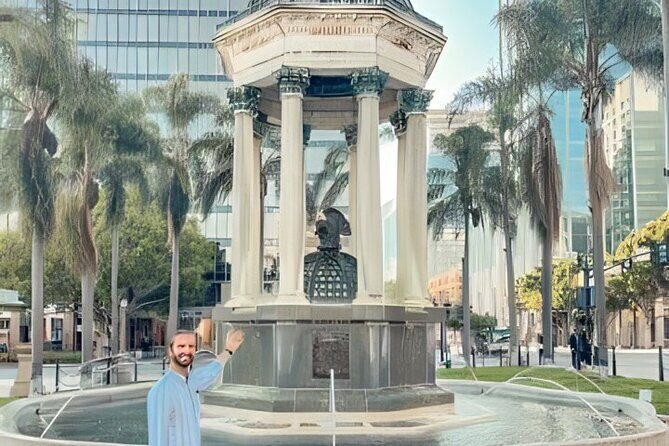
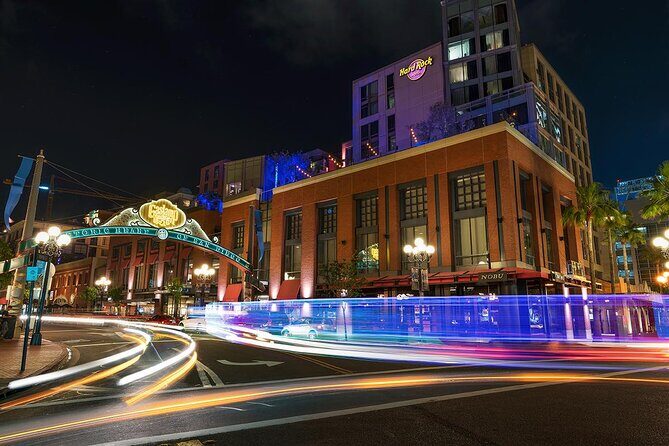
Your first major stop is in the Gaslamp Quarter area, and Josh uses it as a jumping-off point for how San Diego became the birthplace of California. The talk doesn’t float in space. It’s tied to the shift from early Spanish exploration to the first settlement stories in Old Town, then onward to the Mexican-American War and California becoming the 31st state.
Why that’s useful: it gives you a framework for what you’re seeing around you. Gaslamp Quarter today is known for nightlife and Victorian-era architecture, but this tour reframes it. Instead of treating the buildings like scenery, you learn what kinds of power, borders, and economic changes shaped the city over time.
A second thing I appreciate here is the pacing. This is not a long lecture. You get the big moments, then you move on while the information is still fresh.
Horton Plaza Park: downtown growth and the zoo connection
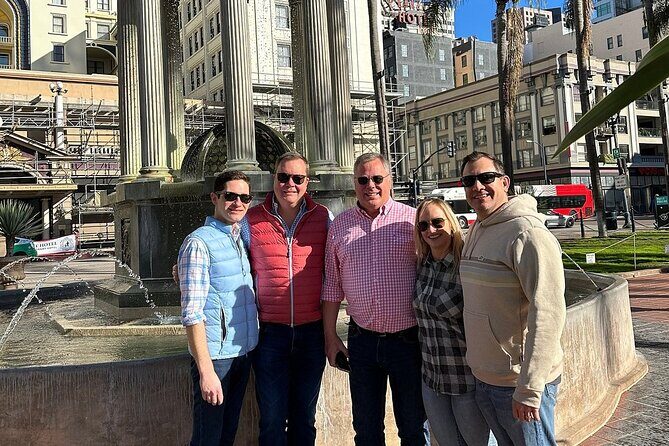
Next you shift to Horton Plaza Park, still in the downtown core. This stop focuses on how San Diego grew and how downtown took shape in the late 1800s—complete with mentions of international recognition and the development of the San Diego Zoo.
That last part is a smart detail. People often think of the zoo as a separate attraction, not a byproduct of city planning and civic ambition. When a guide connects it to the downtown vision, you get a clearer picture of why the city invested in public institutions, not just commerce.
One potential drawback to keep in mind: because the tour is built for quick, street-level stops, you’re getting the highlights rather than a deep, inside look at any one site. If you prefer spending an hour in one place, you’ll still enjoy the tour, but you’ll likely want to follow up elsewhere afterward.
Santa Fe Depot: why the rail line mattered
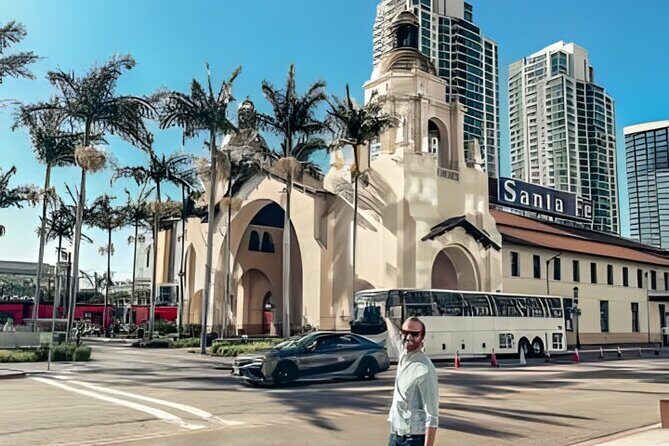
At the historic Santa Fe Depot, you learn how train access connected the east coast and west coast—and how that connection triggered an era of prosperity. The point isn’t just that trains existed. It’s that accessibility changed who could arrive, how fast, and how often.
That matters because the talk connects rail access to wealthy elites visiting San Diego. It also ties in a specific tourism milestone: the opening of the famous Hotel Del Coronado, which helped turn San Diego into a place people came to, not only a place they passed through.
If you’ve ever looked at a train depot and wondered why it’s still an anchor point in a city, this stop answers that. Transportation infrastructure can be boring on paper, but here it becomes a cause-and-effect story.
And yes, you’re learning from outside the depot. That keeps the tour moving, and it fits the overall rhythm: short lessons, quick walks, steady progress.
Other walking tours we've reviewed in San Diego






Ending by USS Midway: world wars to the modern military industry

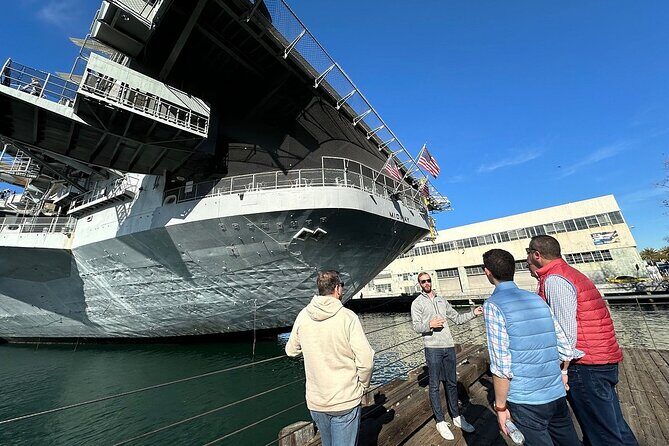
The walk finishes outside USS Midway Museum at 910 N Harbor Dr. This is where the tour shifts from tourism and civic growth into military influence. The focus is on San Diego’s role in world wars and how that evolved into the modern day military industry.
Ending here makes sense because the waterfront has a clear visual connection to the military footprint. Even without museum entry, you can feel the “why” behind the location. The guide gives you context, and then you stand at the edge of where the story becomes tangible.
Just remember the key limitation: the tour does not include entrance to the USS Midway Museum, and you won’t go inside. If you want to actually tour the ship museum, treat the walk as your pre-game. You’ll likely understand more of what you see once you buy a separate ticket.
What the short time window means for you
This tour runs about 1 hour 15 minutes with roughly 15 minutes per stop. That format is ideal when you want orientation more than immersion. You get enough information to steer your own next choices, but you aren’t stuck when you’d rather go do something else.
It also helps you avoid decision fatigue. On a first visit, San Diego can feel like a bunch of separate attractions. This walk stitches the city into a sequence, so you can plan the rest of your day with more confidence.
Also, the group is capped at 20 travelers. That usually helps keep it from feeling like a cattle call, especially when the guide can answer questions while moving between stops.
How much is $10 worth, really?

$10 might sound small, but it’s not just the cost that matters. It’s what you’re getting for that money: a guided timeline from early settlement stories through statehood, then downtown development, then rail-driven prosperity, and finally the world wars and modern defense industry—delivered at no additional admission stops.
Because the tour stays outside major sites, you’re not paying to enter at each point. So you keep flexibility. If you want to spend your money later on the museum or another attraction, this walk acts like a paid orientation that helps you spend smarter.
If you’re traveling with someone who likes history but doesn’t want a long slog, this fits well. The structure keeps momentum, and Josh’s explanations (including restaurant and activity suggestions after the tour, when you ask) can help you turn learning into a better itinerary.
Who this walk suits best
This is a great match if:
- you’re on a first visit and want a quick city framework
- you like your history explained through real places, not just slides
- you have limited time and want value per minute
- you prefer a small group format (max 20)
It also works well for people who want an easy start in downtown. The meeting point is in a clear, central location, and you end near a major landmark where you can branch out.
If you already know a lot of San Diego history and you want museum-style depth at multiple stops, you may find it more like a focused introduction than a replacement for longer tours. Use it to get your bearings, then go deeper on your own.
Tips to make it smooth on the day
A few small habits will make a difference:
- Plan for good weather. The tour requires it, and poor conditions can mean a different date or a full refund.
- Bring water and wear comfortable shoes. Downtown walking adds up even in a short tour.
- Arrive a little early at 530 Broadway. Starting on time keeps the pacing tight.
- After the walk, ask Josh for next steps. The guide has a track record of sharing recommendations for restaurants and activities.
Should you book this historical walking tour?
Yes, if you want a smart, fast way to understand why downtown San Diego looks the way it does. The price is low for what you get: a clear timeline guided by Josh, placed right onto Gaslamp Quarter, Horton Plaza Park, Santa Fe Depot, and the USS Midway area.
I’d skip it only if your main goal is museum access inside USS Midway. In that case, you’ll still learn from the walk, but you’ll need to book the museum separately anyway. Treat this as context before you go explore, not as a replacement for hands-on viewing.
FAQ
How long is the San Diego Historical Walking Tour?
It runs about 1 hour 15 minutes.
Where does the tour start and where does it end?
The tour starts at 530 Broadway, San Diego, CA 92101, and ends outside USS Midway Museum at 910 N Harbor Dr, San Diego, CA 92101.
Does the tour include admission to the USS Midway Museum?
No. The tour does not include entrance to the USS Midway Museum, and you do not go inside.
What is the price per person?
The price is $10.00 per person.
What language is the tour offered in?
The tour is offered in English.
Is there a limit on group size?
Yes. The tour has a maximum of 20 travelers.