REVIEW · SAN DIEGO
Urban Adventure Quest: 3-Hour Interactive Tour in San Diego
Book on GetYourGuide →Operated by Urban Adventure Quest · Bookable on GetYourGuide
San Diego becomes a living game board. Urban Adventure Quest turns the city’s waterfront and Little Italy into a phone-guided scavenger hunt, with clues and short challenges that make you walk about 2.5 miles at your own pace. I love that it starts when you want and you can either enjoy the sights or race for points, and I love the value of a fixed $49 group price (up to 5) instead of paying per person. My one caution: some challenges can feel tricky, and if a starting area is unexpectedly closed, you may lose time adjusting your route.
You follow step-by-step instructions on your smartphone (bring one with internet capability), and the course links Waterfront Park, the Maritime Museum area, USS Midway, and down through war memorials. There’s one point where you use the downtown transit system, so it’s not a pure “walk straight through” tour.
In This Review
- Key points before you play
- San Diego, turned into a phone scavenger hunt
- Price and group setup: $49 for up to 5
- From Waterfront Park to Little Italy: your 3-hour route
- Maritime Museum, USS Midway, and the war memorial stretch
- One transit step in the game (and why it matters)
- Challenges and clue difficulty: how to not get stuck
- Pacing, pauses, and keeping everyone engaged
- Accessibility and practical movement around downtown
- What you actually get for your money
- Who this San Diego quest fits best
- Should you book this San Diego scavenger hunt?
- FAQ
- How long is the Urban Adventure Quest?
- Where does the quest start?
- How much does it cost?
- Do we need to bring our own smartphone?
- How much walking is involved?
- Is the experience wheelchair accessible?
Key points before you play
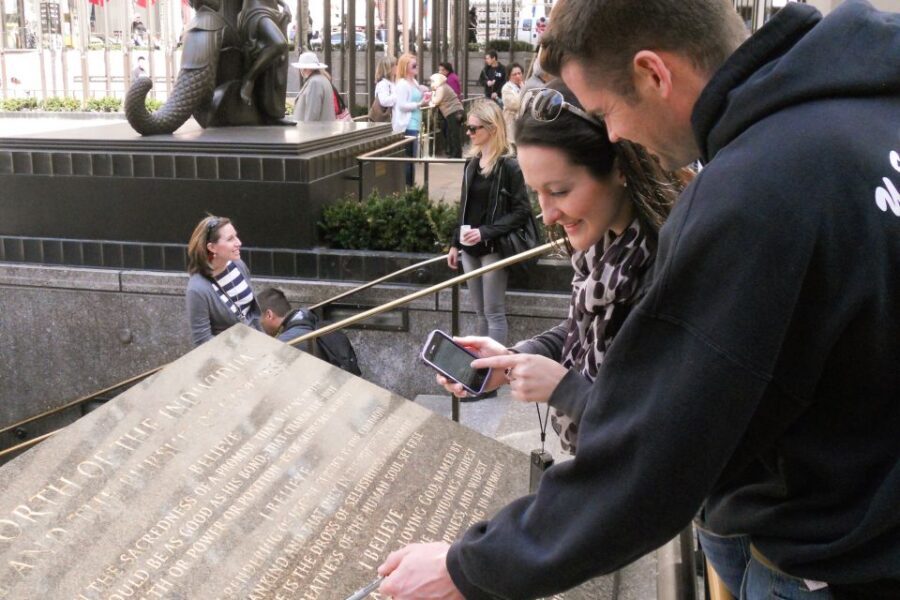
- Start whenever you want: your voucher unlocks the quest, and you set the tempo.
- Group pricing that’s budget-friendly: $49 per group up to 5 people.
- A route with real San Diego landmarks: Little Italy, Waterfront Park, Maritime Museum, USS Midway, and war memorials.
- Amazing Race-style options: play for fun at an easy pace or go competitive for speed/points.
- A phone-led scavenger hunt with challenges: expect some that are straightforward and others that need patience.
San Diego, turned into a phone scavenger hunt

This is the kind of tour that changes how you move through a city. Instead of passively looking at signs, you’re solving little tasks that push you to notice street details, viewpoints, and landmarks you’d otherwise skim right past.
At the heart of it is a smartphone scavenger hunt for 1 team. You’re not depending on a live guide in the classic sense; you’re using your phone for the sequence of clues and prompts, then picking the pace—slow and scenic or quicker and more competitive.
The “game” part is what makes it fun, but what I like is the mix. You still get a sightseeing loop through the areas people actually want to see, plus a few spots that feel more personal once you’re actively hunting information around them.
Other San Diego tours we've reviewed in San Diego



Price and group setup: $49 for up to 5

The headline value is simple: it costs $49 per group, not per person (with a group size cap of up to 5). If you’re traveling with a couple friends or a family unit, this can be a cheaper way to cover the same geography than booking a standard guided tour.
One smart detail is that teams can be any size. For best results, though, the quest runs most smoothly with no more than about 6 people on a team. If your group is bigger, you can split into multiple teams and compete for the best point score and time.
You’ll also need to purchase each quest with a unique email address and password per team. That’s not hard, but it does mean you should decide team names and who controls the login before you’re standing at the starting point with everyone asking, Wait, whose phone is this?
From Waterfront Park to Little Italy: your 3-hour route
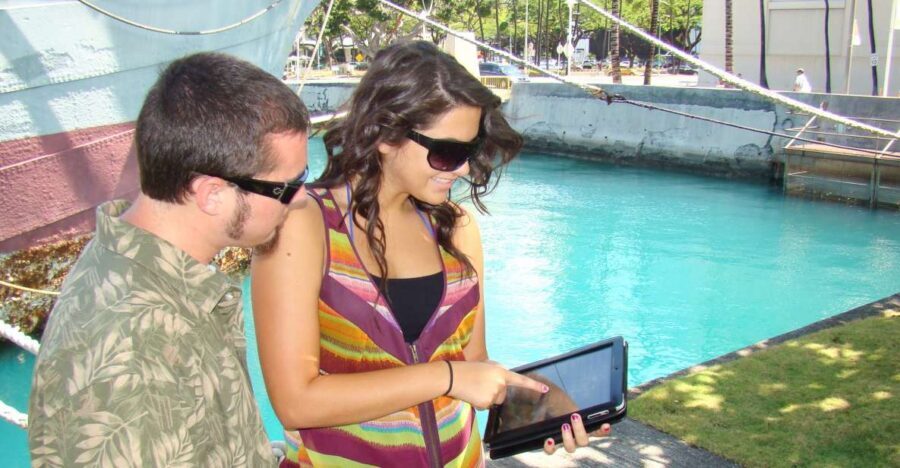
Your quest begins at Waterfront Park. The first stretch sets the tone: you’re learning how the game works while also orienting to the downtown waterfront area.
From there, the route takes you into Little Italy. This is a real bonus if you like to mix sightseeing with food energy. You can pause and take a stroll, then loop back into the game with gelato or a snack style break that fits the neighborhood.
After Little Italy, you’ll work your way toward the Maritime Museum area. Then the course pushes further along the waterfront to USS Midway and keeps going down toward the war memorials. The vibe becomes more reflective as you pass from neighborhood streets into formal memorial spaces, which is a nice contrast for a “fun first” activity.
Distance-wise, you’re looking at about 2.5 miles of walking over roughly 3 hours. That’s a comfortable “city level” walk, but it’s still walking—so wear shoes you’d actually use for a long neighborhood stroll, not just a quick coffee run.
Maritime Museum, USS Midway, and the war memorial stretch
This is where the quest feels most like San Diego. Instead of naming landmarks and calling it a day, the game encourages you to connect clues with what you’re seeing right in front of you.
You’ll include the Maritime Museum area and USS Midway on your path. Even if you don’t go inside anything (the quest is the main structure), the surrounding waterfront context helps you better understand what makes this slice of the city so distinctive.
Then come the war memorial moments. Key stops include the Bob Hope Memorial and the Kissing the War Goodbye statue. The quest also guides you down to additional war memorials along the route, which makes this portion feel more purposeful than just sightseeing.
A practical point: these areas can be calmer and more open than Little Italy. That can be good for focusing on clues, but it also means you’ll want to keep an eye on where you’re standing and where your group is gathering so you don’t block foot traffic while you work through a challenge.
One transit step in the game (and why it matters)
Unlike a strictly walking scavenger hunt, this quest uses the downtown transit system at one point. That’s a useful twist because it breaks up the walking and keeps you from burning out your feet too quickly.
It also changes how you plan your timing. If your group is competitive, transit moments can feel like part of the challenge. If your group is more relaxed, it’s still a chance to sit for a minute and reset before you head back into clue-solving.
If you’re coming with kids or a mixed-mobility group, this is one of the few built-in variables. You’ll want to stay together at the transit stop and have one person ready to check instructions on the phone quickly so you don’t lose the thread.
A few more San Diego tours and experiences worth a look



Challenges and clue difficulty: how to not get stuck
Some parts are straightforward, and some are genuinely tricky. That pattern shows up in feedback, and it matches what a clue-based game tends to do: early on, you’re learning the logic; later, you’re applying it.
I especially recommend you treat the challenges like a collaboration tool, not a solo test. The best teams are the ones where you split tasks naturally—one person reads, one person checks what you’re looking at, another runs the phone instructions. That simple division keeps frustration low.
A common wish is for clearer reasoning on how the correct answers are found. You may still finish the quest even if a clue feels confusing, but if you’re the type who wants to understand every step, you might want to plan extra patience into the last third of the game.
If you want a smoother experience, pack like you’re doing a field assignment. The quest strongly suggests bringing water and snacks, plus a calculator, pencil, and paper. That’s not old-fashioned—it helps when a clue needs basic number crunching or you want to jot down what you’re seeing before you forget it.
Pacing, pauses, and keeping everyone engaged
One of the nicest features is control. You can choose when to start and how quickly you play, so you’re not forced into a rigid tour timetable. That helps with families, travelers on a tighter schedule, and groups that want to take photos without feeling guilty about slowing down.
You can also pause the activity for a break. In real life, that matters because it turns the quest into something you can ride comfortably, rather than a nonstop sprint.
For teenagers, this format can work well. The goal isn’t just to be entertained—it’s to keep them moving and focused. Tasks that are challenging enough to feel like a puzzle tend to hold attention better than simple checkbox sightseeing.
The flip side is food. If your team includes teens (or anyone with big energy swings), plan a snack stop in advance. Little Italy is a great place for it, and having a quick bite prevents the game from turning into a hangry problem-solving session.
Accessibility and practical movement around downtown
The quest is listed as wheelchair accessible, and it’s designed as a city route rather than a remote hike. Still, you should think in terms of “accessible route, not zero friction.” Downtown sidewalks, crowds near landmarks, and the transit step can change how easy it feels.
Your best move is to keep your group compact and organized. When you’re doing clue-based tasks, it’s easy for everyone to drift while reading the phone. A tight huddle keeps momentum up and makes it easier to navigate around walkers and slow-moving clusters.
Also, don’t underestimate hydration and shade. Even though you’re not on a beach all day, the waterfront and downtown can be exposed, especially if you play in warmer months.
What you actually get for your money
For $49 per group, you’re buying three things: time, route coverage, and interaction. A standard paid tour might get you a guide and a narration, but you often don’t get the same “active participation” that makes you slow down and notice details.
Here’s the value angle that matters: you’re covering major waterfront sights, including USS Midway and well-known memorial sites, while also getting Little Italy’s neighborhood feel. The quest’s structure helps connect those stops so it feels like a coherent outing, not a hop-on hop-off shuffle.
If you’re traveling solo, the group price can still work if you’re joining a group of up to 5, but the sweet spot is with a small crew. That’s when sharing the phone, splitting clue tasks, and trading answers feels natural—and not like you’re waiting for one person to read instructions.
Who this San Diego quest fits best
This is ideal if you like doing a city at a smart pace. You get enough structure to know what to do next, but enough freedom to stop, stretch, and control the speed.
It’s also a strong choice for mixed-ability groups who want variety. Some people are into puzzles; others mostly care about views and landmarks. The quest gives each person a job: someone can read and strategize while the others handle spotting clues in the real world.
It’s less ideal if your group hates ambiguity. If you want every answer explained immediately or you’re the type who gets irritated by puzzles, you might find a few challenges frustrating, especially if a clue feels like it has unclear logic.
And if you’re the kind of person who plans everything to the minute, remember the quest is a game. If you play slowly or stop often for food and photos, you might feel like the experience runs long—one reason pacing control is so important.
Should you book this San Diego scavenger hunt?
Book it if you want a fun, low-cost way to see downtown highlights while staying active. The blend of Waterfront Park, Little Italy, Maritime Museum area, USS Midway, and war memorial sites makes it a practical route for a 3-hour outing, and the group pricing is hard to beat.
Consider skipping or choosing a different format if you dislike clue-solving. A few challenges can feel difficult, and not every clue will automatically make sense on the spot. Also, if your day is tightly scheduled, keep a little time buffer so puzzle delays don’t stress you out.
If you’re traveling with friends or teens, I’d especially lean toward booking. This is the kind of activity where people get excited, talk to strangers about what they’re doing, and turn a normal sightseeing day into something you actually remember.
FAQ
How long is the Urban Adventure Quest?
The duration is about 3 hours.
Where does the quest start?
The adventure begins at Waterfront Park. To activate and begin, you follow the step-by-step instructions on your voucher.
How much does it cost?
It costs $49 per group (up to 5 people).
Do we need to bring our own smartphone?
Yes. The scavenger hunt uses your smartphone, and a smart phone or iPad with internet capability is not included.
How much walking is involved?
The route involves about 2.5 miles of walking.
Is the experience wheelchair accessible?
Yes, it is listed as wheelchair accessible.