REVIEW · SAN DIEGO
San Diego Balboa Park Highlights Small Group Tour with Coffee
Book on Viator →Operated by San Diego Walks · Bookable on Viator
Balboa Park can feel like a maze. This tour helps you make sense of the park fast, with a route that hits the architecture, gardens, and expo-era landmarks while a guide ties it all together with stories about San Diego’s past. I especially like the small-group pace and the coffee cart beverage break that keeps the walk from turning into a slog.
I also like the way the guide points out the details you would miss on your own, like how Balboa Park’s buildings connect to the Navy and the 1915 and 1935 expositions. In the reviews, guide Jennifer shows up again and again as someone who makes the facts stick with friendly humor and clear explanations. One thing to consider: it’s still a walking tour, and 2 hours is tight if you show up late or want to linger at every stop.
If you want an efficient introduction that leads to a better second visit, this is a strong choice. With comfortable shoes and an early arrival, you’ll get the orientation without rushing—plus you’ll leave with a park resource list for what to explore next.
In This Review
- Key Highlights in Plain English
- Why Balboa Park Feels Like a Mini World on Foot
- Price and Logistics: What $60 Really Covers
- The 2-Hour Route: How Each Stop Teaches You the Park
- Stop 1: Balboa Park (Starting Point to Get Your Bearings)
- Stop 2: Cabrillo Bridge (Quick Pause, Big Views)
- Stop 3: California Tower (The Landmark That Tells a Founding Story)
- Stop 4: Alcazar Garden (A Name With a City Swap in Its DNA)
- Stop 5: Old Globe Theatre (Why the Theatres Matter)
- Stop 6: Plaza de Panama Fountain (A Useful Hub for Your Next Choices)
- Stop 7: Botanical Building and Lily Pond (Wildlife in a Historic Setting)
- Stop 8: Spanish Village Art Center (Cottages, Studios, and a Beverages Permission Slip)
- Stop 9: Moreton Bay Fig Tree (A Monument You Walk Up To)
- Stop 10: Bea Evenson Fountain (A Playful Scene With a Local Surprise)
- Stop 11: Casa del Prado (Architecture Lessons in a Practical Form)
- Stop 12: El Prado (The Main Stage of the Exposition Story)
- The Coffee Cart Stop: How to Make It Worth Your Taste Buds
- What Makes the Guide Experience Work (Jennifer’s Style)
- Practical Tips for a Smooth Day at Balboa Park
- Who This Tour Is Best For
- Should You Book This Balboa Park Tour With Coffee?
- FAQ
- How long is the Balboa Park highlights small group tour?
- What does the $60 price include?
- Is admission free for the stops on the itinerary?
- Where do I meet, and where does the tour end?
- How large is the group?
- Is the tour in English?
- Can I request an audio system?
Key Highlights in Plain English
- Turn-balboa-park-into-a-plan: a guided route so you don’t get stuck wandering between major landmarks
- Jennifer’s story power: clear, personable explanations that connect architecture to real history
- Expo-era landmarks in sequence: you’ll see how 1915 and 1935 shaped the park’s look and identity
- Coffee cart mid-tour: you get a beverage of your choice as a real reset point
- Small group (max 15): easier questions, calmer pacing, less “lost in the crowd” stress
Why Balboa Park Feels Like a Mini World on Foot
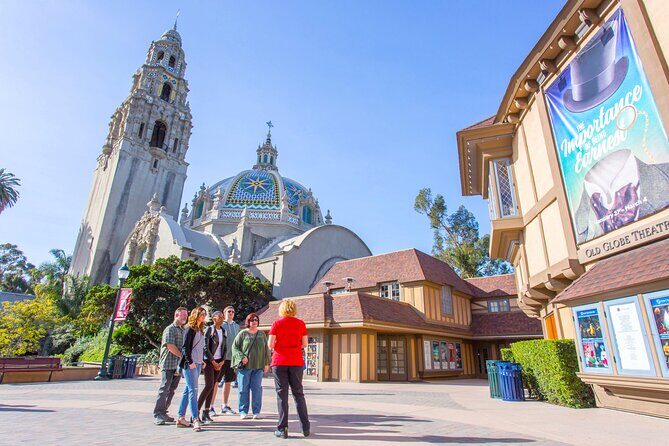
Balboa Park is huge, and not just in a dramatic way. It’s huge in the practical way that you can stand in one spot, look around, and still not know what you’re looking at. This tour fixes that fast with a route designed for first-time orientation.
The big win is that you’re not just “seeing buildings.” You’re learning how Balboa Park’s pieces fit together—gardens, expositions, major landmarks, and the cultural organizations that live in between. You get a mental map, and after the tour, you’re better at choosing what to do next day-by-day (museum hours, gardens, viewpoints, and places to eat).
I also like the rhythm. The stop list spreads out the highlights so you get frequent look-and-learn moments without one long grind. That balance shows up in the reviews too—people mention the walking felt manageable and the pacing stayed friendly, not hurried.
Other San Diego tours we've reviewed in San Diego


Price and Logistics: What $60 Really Covers
The price is $60 per person for about 2 hours, and the tour includes a professional guide plus one beverage at a local coffee cart. There’s also an exclusive park resource list with recommendations for what to explore after the tour.
That matters, because Balboa Park is the kind of place where you can waste time. You might spend 30 minutes trying to figure out what’s where, which building is worth the detour, or which areas are open and what’s worth a return visit. Paying for a small-group guide is really paying for time-saving and clarity, not just commentary.
Group size is capped at 15, which keeps it personal enough that you can ask questions without feeling like you’re shouting into a megaphone. You’re also moving between stops that are listed as free admission ticket locations, which helps the overall value math. (Just remember: “free admission” applies to the stops on the route, not every museum within the park.)
Two small logistics notes to plan around:
- Paid parking is in effect in Balboa Park, so build in time or consider public transit.
- You’ll want comfortable shoes and a bit of patience, because this is a tight loop. One review that dipped to 2 stars points out how parking trouble and lateness can affect the tone of the experience. Best fix is simple: arrive early and use the contact info on your voucher if something unexpected comes up.
The 2-Hour Route: How Each Stop Teaches You the Park
This tour is set up like a guided walkthrough with quick, focused stops. You’ll move through major landmarks, but each one has a reason—either a viewpoint, a key expo-era structure, or an architectural clue that makes the rest of the park easier to understand.
Stop 1: Balboa Park (Starting Point to Get Your Bearings)
You start with Balboa Park itself, the cultural hub with grand architecture and gardens that can be very “Instagram-friendly.” The guide helps you orient visually, so when you see columns, domes, or sweeping pathways later, you’ll have context for what you’re looking at.
Practical tip: bring your phone camera early. The park’s best photo angles are easier when you know where to aim, and this stop sets that up.
Stop 2: Cabrillo Bridge (Quick Pause, Big Views)
Next is a pause on Cabrillo Bridge. You look out toward downtown and you’ll also get sightlines that include the San Diego Zoo and the historic highway below. It’s a short stop, but it’s a morale boost: you step out of the dense park feel and get a “big picture” moment.
If you like city views with a historic feel, this is the kind of stop that makes you remember the walk.




Stop 3: California Tower (The Landmark That Tells a Founding Story)
The California Tower is built for the 1915 Panama-California Exposition, and it also carries the story of San Diego’s founding in its ornate facade. The guide gives you multiple looks at the tower—each view cleaner than the last—so you can really absorb it instead of just snapping one quick photo and moving on.
This is one of the stops that helps you understand how the park blends pageantry and civic identity.
Stop 4: Alcazar Garden (A Name With a City Swap in Its DNA)
Alcazar Garden points to the influence of Seville, Spain. It was originally developed for the 1915 exposition and later redesigned for the 1935 exposition. That “repeat with tweaks” story is important: Balboa Park isn’t static. It has layers from different eras, and the park’s layout reflects that.
If you like garden design, this is a small stop with a surprising amount of meaning.
Stop 5: Old Globe Theatre (Why the Theatres Matter)
Old Globe Theatre brings the arts into the story. The theatre complex has been entertaining audiences since construction connected to the California Pacific International Exposition in 1935. You also get practical guidance on what to do when shows are running, including how to think about ticket planning.
Even if you’re not seeing a performance that day, this stop helps you see Balboa Park as more than a museum campus.
Stop 6: Plaza de Panama Fountain (A Useful Hub for Your Next Choices)
Plaza de Panama Fountain sits in an area surrounded by cultural organizations and places to eat. The guide uses this as a handoff point: you’re shown what to notice and you’re given details for continuing exploration after the tour.
This matters because it’s easy to eat too early or too late in Balboa Park. A good guide helps you line up food with what you actually want to see.
Stop 7: Botanical Building and Lily Pond (Wildlife in a Historic Setting)
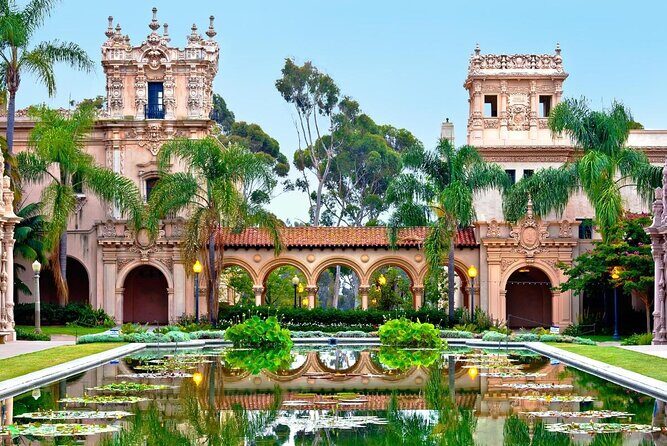
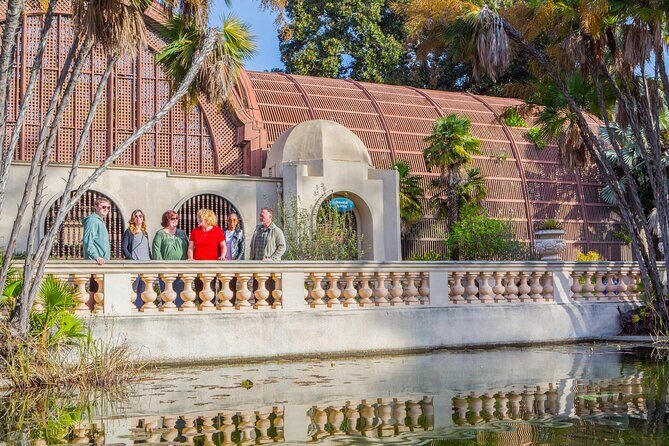
The Botanical Building is described as the largest of its kind when it was built for the 1915 exposition, and it’s one of the buildings designed to last. In front of it is a historic pond where you can spot koi and other wildlife.
This stop is a nice reset. It breaks up the architecture focus and adds a nature moment—plus it’s a spot where people tend to slow down and just look.
Stop 8: Spanish Village Art Center (Cottages, Studios, and a Beverages Permission Slip)
Spanish Village Art Center is a colorful set of cottages built for the 1935 California Pacific International Exposition. It houses 37 studios and many working artists, and the tour gives you time to explore the village and grab a beverage.
This is one of the best stops for people who like creative spaces. You’re seeing art as a living part of the park, not only something behind glass.
Stop 9: Moreton Bay Fig Tree (A Monument You Walk Up To)
The Moreton Bay Fig Tree was planted for the 1915 exposition, and the route includes getting up close thanks to a viewing platform. This is the kind of stop that feels small until you realize it’s a living artifact with a long timeline behind it.
If you love big trees and slower details, you’ll enjoy this one.
Stop 10: Bea Evenson Fountain (A Playful Scene With a Local Surprise)
Bea Evenson Fountain is named for the founder of the Committee of One Hundred. It attracts kids, dogs, and birds, and it also has a surprising feature activated by the Fleet Center next door.
Even if you don’t care about fountains in general, this is a memorable stop because it adds a little everyday energy to the expo-era focus.
Stop 11: Casa del Prado (Architecture Lessons in a Practical Form)
Casa del Prado is where multiple cultural and botanical organizations call home. It also contains clues about how Balboa Park’s detailed architecture was created quickly and cheaply.
That’s a great concept for travelers: you’ll notice craftsmanship later in the park with a new lens. You stop seeing buildings as just pretty shapes and start seeing them as engineering choices.
Stop 12: El Prado (The Main Stage of the Exposition Story)
Finally, you end up in El Prado, the main area tied to the 1915 exposition. The guide points out ornate buildings and architectural details that help you see what was staged here and why it still matters.
This ending works because you return to the “core campus feel” and leave with a mental anchor for where to go next.
The Coffee Cart Stop: How to Make It Worth Your Taste Buds

One beverage is included at a local coffee cart. People consistently talk about this part as a highlight because it gives you a comfortable break without turning the tour into a long sit-down.
The best advice: treat the coffee stop as your mid-tour strategy. Grab your beverage around the halfway point, then use the extra breath to scan the area and decide what you want to re-visit after the tour. If you’re the type who likes options, you’ll appreciate that it’s a beverage of your choice rather than a single fixed drink.
The reviews mention favorites like a peanut butter espresso frappe and a peach tea lemonade (a specific combo that clearly impressed people). If those sound like you, go for it. If not, just pick something that matches your energy level—this walk includes enough stops that caffeine can be helpful, not mandatory.
What Makes the Guide Experience Work (Jennifer’s Style)
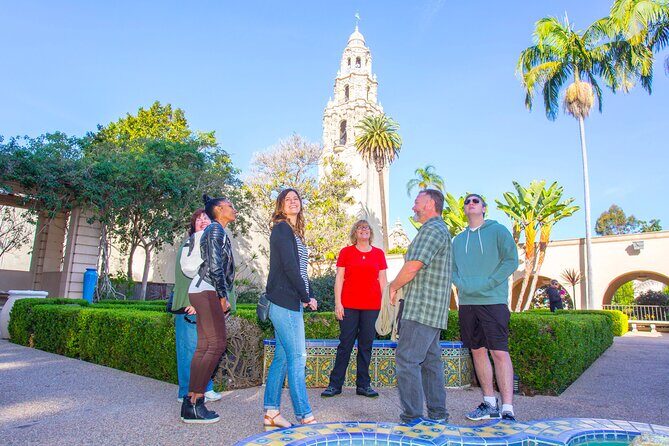
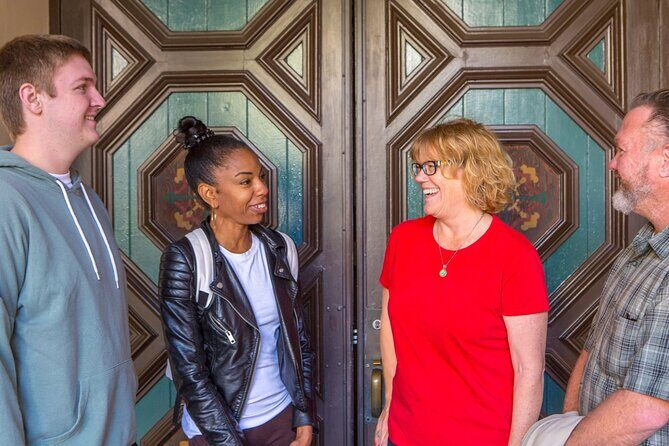
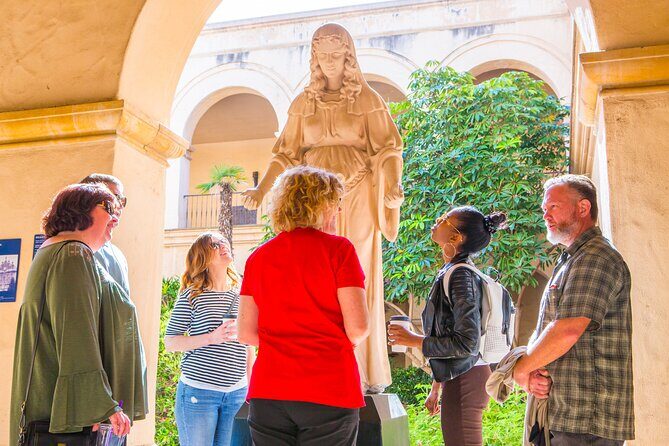
The reviews are very consistent about one theme: Jennifer is friendly, fun, and good at making the park’s stories make sense. People also mention she balances history and architecture with practical context, and that she answers questions without making it feel like an interrogation.
I also like that the tour is described as easy to follow and accommodating, including for big age ranges. That kind of real-world flexibility matters because Balboa Park can be overwhelming even when you’re in good shape.
There’s one caution worth repeating. The only 2-star review raises an issue with guide tone when someone was late due to parking and with unclear phone contact details. I’d treat that as a reminder to:
- arrive early enough that parking issues don’t push you behind
- use the phone number provided in your voucher if you’re stuck
- remember the tour is scheduled for a reason, and the route depends on being on time
If you do that, the odds are heavily in your favor for a positive, story-rich experience.
Practical Tips for a Smooth Day at Balboa Park
Here’s how to set yourself up for a good walk.
Wear comfortable shoes
You’ll be moving between landmarks repeatedly, and the tour is timed in a way that keeps you moving. Flat shoes beat cute shoes with “just one more stop” plans.
Bring a phone charger (and a plan for photos)
Balboa Park offers plenty of photo opportunities, including spots that are easy to Instagram. If you’re taking photos every stop, your battery will feel it.
Plan for paid parking
Paid parking is now in effect in Balboa Park. If you’re driving, don’t assume you’ll find something quickly near the start. If you’re not sure, consider public transportation or ride-share.
If you want audio support, ask ahead
The tour notes that you should let them know in advance if you would like an audio system. That’s helpful if you’re sensitive to noise or you just want captions for spoken facts.
Who This Tour Is Best For
This tour is a great match if you:
- want a first-time orientation to Balboa Park
- love architecture and gardens but don’t want to research for hours
- prefer small groups where questions are welcome
- want a simple coffee break built in, not as an afterthought
It’s also a nice option for couples and friends who want to walk, talk, and see a lot without overcommitting to museum ticket planning on the spot.
Should You Book This Balboa Park Tour With Coffee?
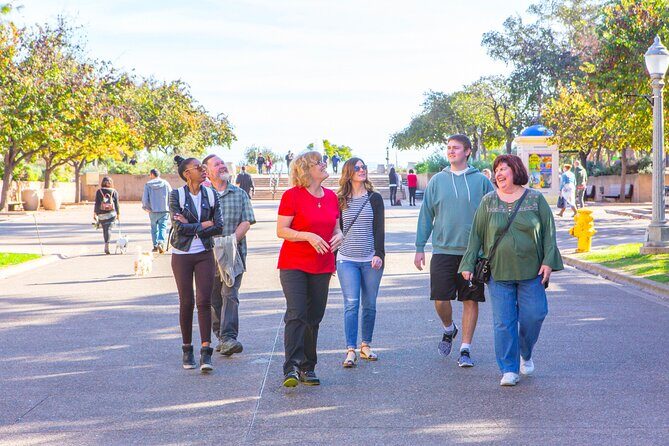
Yes, I’d book it if you want the fastest path to feeling confident about Balboa Park. For $60, you’re getting an organized walk, a guide who connects the park to major expo-era stories, and a real included beverage break. It’s the kind of tour that helps you enjoy a second visit more, because you’ll understand where things belong and what to prioritize.
Skip it or think twice if you:
- hate walking and need long sit-down time every few minutes
- know you struggle with timed arrivals and parking stress
- expect one museum interior after another (this route focuses on key landmarks and campus structure)
If you’re planning your first day in Balboa Park, this is a smart, practical way to start.
FAQ
How long is the Balboa Park highlights small group tour?
It runs for about 2 hours.
What does the $60 price include?
You get a professional guide, one beverage at a local coffee cart, and access to a park resource list with recommendations for after the tour.
Is admission free for the stops on the itinerary?
The listed stops on the route are marked as admission ticket free.
Where do I meet, and where does the tour end?
The tour starts at 698 El Prado, San Diego, CA 92103, USA and ends at 1350 El Prado, San Diego, CA 92101, USA.
How large is the group?
The maximum group size is 15 travelers.
Is the tour in English?
Yes, it’s offered in English.
Can I request an audio system?
Yes, you should let the provider know in advance if you would like an audio system.