REVIEW · LA JOLLA
Historic La Jolla Walking Tour
Book on Viator →Operated by Historic La Jolla Walking Tours · Bookable on Viator
La Jolla comes alive fast on foot. The Historic La Jolla Walking Tour turns well-known viewpoints into a story you can actually picture, from Ellen Scripps connections to the tiny details around the Cove. I like that the guides mix big names and small facts in a way that stays fun, and I love that you get sea lion time built right into the route. One thing to consider: it’s not a sit-and-watch tour, so you’ll want moderate stamina for an easy-but-active coastal walk.
You’ll cover key stops in about 2 to 2 hours 15 minutes, keeping the pace friendly in a small group (max 15). The big payoff is how quickly you start seeing La Jolla as more than scenery—more like a place shaped by specific people, decisions, and buildings. If you’re bringing kids, note it’s not recommended for children under 10, and it’s also not ideal for walking problems.
In This Review
- Quick highlights you can plan around
- Why this tour feels different than basic sightseeing
- Meet-up and what the schedule really means for you
- Stop 1: La Jolla Recreation Center and the Ellen Scripps connection
- Stop 2: Museum of Contemporary Art San Diego, without touring the museum
- Stop 3: La Jolla Historical Society at Wisteria Cottage (Virginia, Jenny)
- Stop 4: St James by-The-Sea Episcopal Church and the missing original structure
- Stop 5: Girard Avenue and Prospect Street, the “ground zero” intersection
- Stop 6: The Cave Store, tunnels, and Sunny Jim
- Stop 7: La Jolla Cove—caves, sea lions, and rookeries
- Stop 8: Ellen Browning Scripps Park, the scenic connector stretch
- Stop 9: Children’s Pool and Ellen Scripps’ last gift
- The Wedding Bowl and La Jolla Tide Pools payoff
- Price and value: what $70 buys you in real terms
- Who should book this walking tour
- Practical tips before you go
- Should you book? My honest take
- FAQ
- How long is the Historic La Jolla Walking Tour?
- What does the tour cost?
- Where does the tour start and end?
- Is the tour offered in English?
- Is it suitable for children?
- What is the cancellation policy?
Quick highlights you can plan around
- Ellen Scripps everywhere: her gifts and family ties show up at multiple stops, not just one
- Sea lions and seals on the route: La Jolla Cove and Children’s Pool are major set pieces
- Photo-based history: you’ll stop at an intersection tied to the area’s early “ground zero” story
- A small group feel: maximum 15 people makes it easier to ask questions and stay together
- Guide-led after-tour ideas: you’ll get practical tips for where to eat and what to do next
Why this tour feels different than basic sightseeing
At $70 per person for a roughly 2-hour walk, this isn’t about checking boxes. It’s about learning how La Jolla got shaped—by families, by local institutions, and by choices that still affect what you see today. When you’re done, you don’t just remember the coastline. You know why a recreation center matters, why a historic home became part of a museum space, and what makes certain locations feel like milestones.
The other reason I’d pick this format: you’re moving through the town while the story is fresh. You stop, you look, then you get the “how and why.” That’s the difference between reading a brochure and actually understanding a place.
What you’ll like most: strong guide storytelling, plus a route that naturally builds to the coast. What you might want to watch: the walking pace and uneven ground near coastal viewpoints, especially if you have any mobility limits.
Other La Jolla tours we've reviewed in La Jolla


Meet-up and what the schedule really means for you

You meet at La Jolla Recreation Center, 615 Prospect St, La Jolla, CA 92037. The tour ends back at the meeting point, which makes planning simple. Most trips run about 2 hours to 2 hours 15 minutes, and the group stays small (max 15).
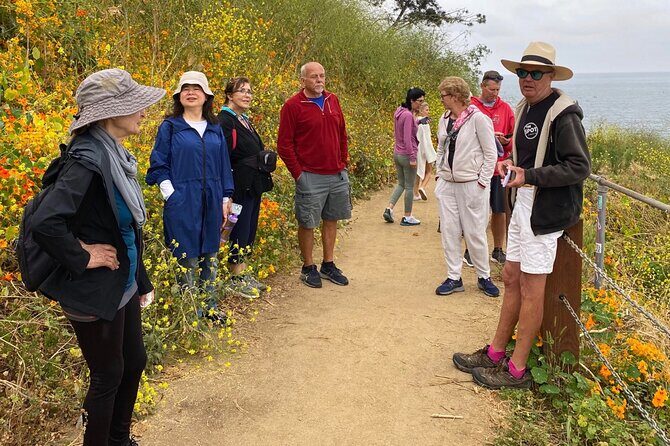
A useful planning benchmark from recent walkers: the route was described as around 90+ minutes and roughly 4 miles for at least some groups. That lines up with the stop timing you’ll experience—short museum-free stops early on, then longer coast viewing later.
If you hate being rushed, you’re in luck. The stops are time-boxed (often just 5 to 10 minutes), but the overall pace is designed to keep you together and still able to take in the views.
Stop 1: La Jolla Recreation Center and the Ellen Scripps connection
Your first stop is the La Jolla Recreation Center, and the tour frames it as one of Ellen Scripps’ gifts to La Jolla. This is one of the smart starts because it gives you context immediately. You’re not wandering with blank context—you’re learning how prominent people shaped public spaces.
Why it’s valuable: it sets up the theme of the tour. La Jolla’s story here isn’t just about famous scenery; it’s about decisions that affected daily community life.
Possible drawback: early stops are quick, so keep your questions in your head and save the deeper ones for when your guide has a natural pause.
Stop 2: Museum of Contemporary Art San Diego, without touring the museum
At the Museum of Contemporary Art San Diego, you do not tour the exhibits. Instead, you get the site’s role: it incorporates Ellen Scripps’ home in La Jolla.
This is a good example of how the tour uses landmarks in a practical way. You’re learning the story tied to the building, not trying to fit a museum visit into a walking schedule.
Why it’s valuable: you see how La Jolla’s private life and later public cultural spaces overlap.
Small consideration: if you’re hoping for museum interior time, you won’t get it here. This is an outdoor history-and-views walk.
Stop 3: La Jolla Historical Society at Wisteria Cottage (Virginia, Jenny)
Next up is the La Jolla Historical Society housed in Wisteria Cottage. This cottage was the residence of Ellen Scripps’ half-sister Virginia (Jenny). You won’t go inside the museum, but you’ll hear how Wisteria Cottage has been used over time and get fun facts about Jenny.
I like this stop because it expands the cast. Ellen Scripps may be the big name in the tour theme, but the narrative becomes more human once you learn about the family links and what those homes actually did across eras.
Why it’s valuable: it adds personality. You start recognizing that history isn’t just dates—it’s people with relationships.
Consideration: like the museum stop, the emphasis is story, not indoor exploration.
Other walking tours we've reviewed in La Jolla




Stop 4: St James by-The-Sea Episcopal Church and the missing original structure
At St James by-The-Sea Episcopal Church, you’ll get a classic “wait, what happened?” moment. The church you see today is beautiful, but what stands there now is not the original structure. Your guide asks the question: where did the original go?
This is one of those stops that makes your brain connect architecture with change. Buildings don’t survive forever, and places evolve. La Jolla isn’t frozen in time, even when it looks timeless.
Why it’s valuable: it teaches you to look for change behind the postcard surface.
Consideration: this is a short stop (around 5 minutes). If you like long architecture conversations, plan to ask questions after the group moves on to the next spot.
Stop 5: Girard Avenue and Prospect Street, the “ground zero” intersection
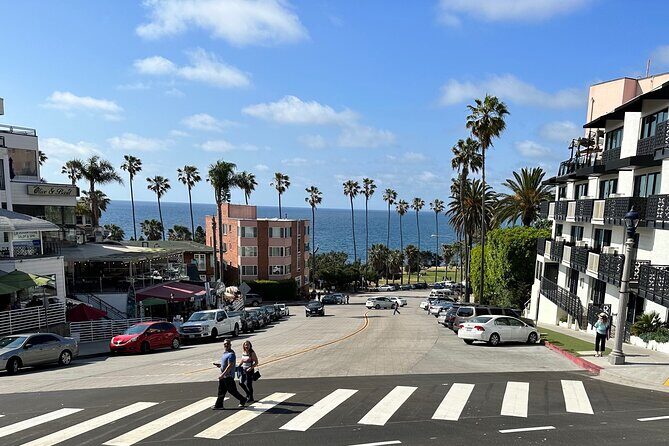
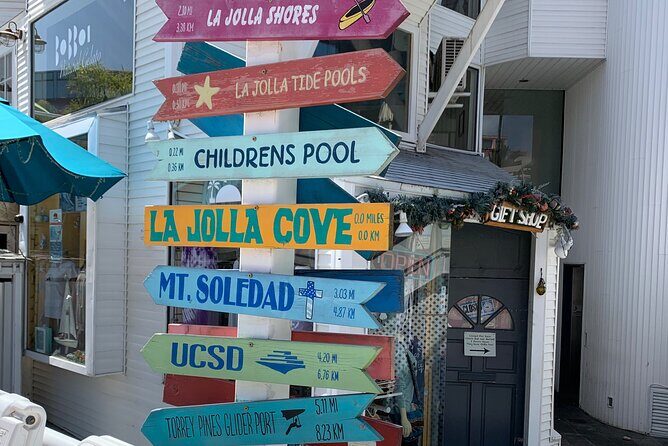
Then you head to Girard Avenue and Prospect Street, described as La Jolla’s “ground zero.” This part of the walk leans on visual proof—your guide shares photos to show how the area looked and how it developed.
This is a highlight for anyone who gets restless during history tours. Photos do what words can’t: they show scale, direction, and the reality that today’s La Jolla sits on top of earlier versions.
Why it’s valuable: it helps you mentally rebuild the town as it used to look.
Possible drawback: because it’s a busy kind of intersection area, it’s smart to listen closely and stay aware of your footing while you’re looking around.
Stop 6: The Cave Store, tunnels, and Sunny Jim
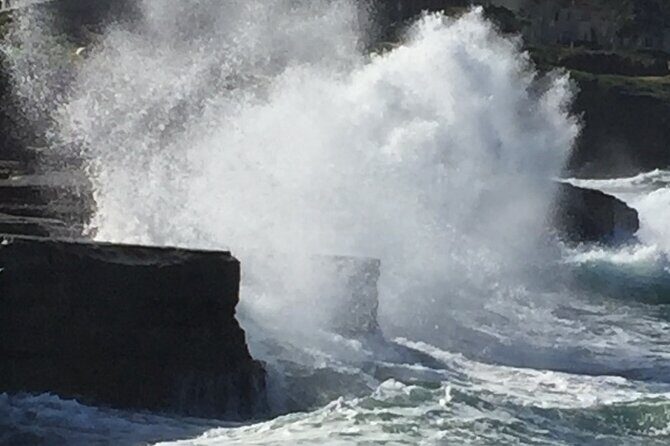
The route continues to The Cave Store, described as the second longest continuously operating enterprise in La Jolla. You’ll also see the oldest too. This is where the tour gets extra fun: you’ll learn why the original owner built a tunnel to Sunny Jim’s cave—and who Sunny Jim was.
It’s rare to find a walking tour that includes local lore with real geographic relevance. This stop does it. You’re not just told a legend. You’re pointed toward the physical setup that made the legend possible.
Why it’s valuable: it turns a quirky landmark into a real story with local meaning.
Consideration: the time here is short (about 5 minutes), so don’t expect a deep folklore lecture. Expect a sharp, memorable hit.
Stop 7: La Jolla Cove—caves, sea lions, and rookeries
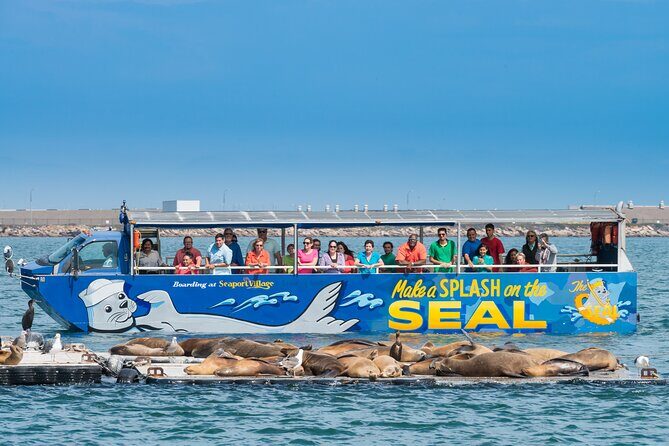
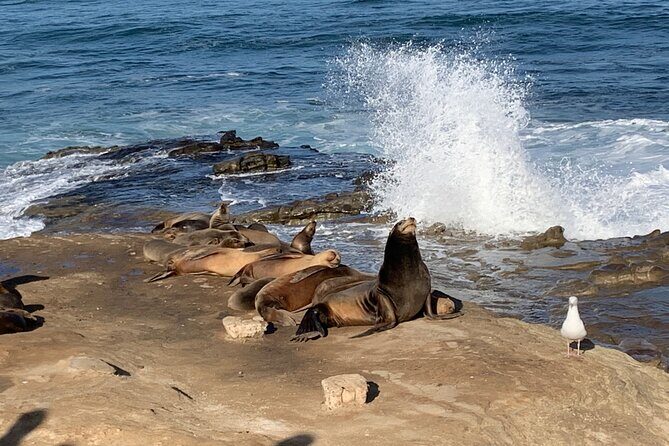
The tour then turns toward the coast at La Jolla Cove. This is where the route pays off visually: caves, sea lions, cormorant rookeries, and some of the best-feeling scenery in the area. The tour time at the Cove is longer here—about 15 minutes—because it’s not just a stop. It’s the main view.
Also, keep your eyes peeled for the animals. A lot of the best moments on this tour are tied to the coast vibe and sea life spotting.
Why it’s valuable: it gives you a reason to pause for long enough to notice details.
Small consideration: coastal air can be chilly or breezy. If you run cold, bring a light layer.
Stop 8: Ellen Browning Scripps Park, the scenic connector stretch
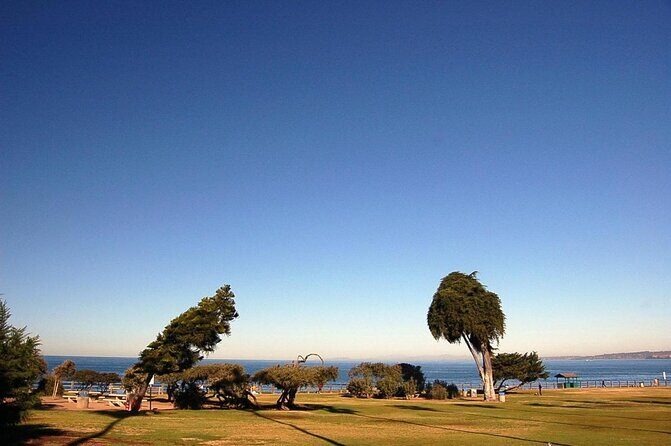
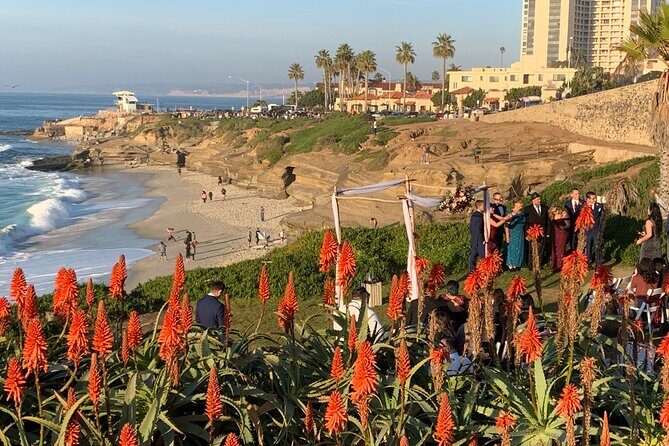
After the Cove, you move through Ellen Browning Scripps Park, a stretch between La Jolla Cove and Children’s Pool. It’s one of the most beautiful sections of the walk, and it’s given about 20 minutes here—long enough to take in the shoreline views without feeling like you’re sprinting.
This is also a good “reset” part of the tour. Earlier stops are history-heavy and tightly timed. This one is scenery-heavy and helps you absorb the story you’ve already heard.
Why it’s valuable: it lets you connect names and stories to the geography you’re standing on.
Consideration: the walk still continues—so keep an eye on your energy and pacing.
Stop 9: Children’s Pool and Ellen Scripps’ last gift
At Children’s Pool, you’ll see another key La Jolla marine scene. This stop is framed as the last thing Ellen Scripps gave to La Jolla while she was still alive. You’ll also see the break wall and lots of seals.
This is a very satisfying stop if you like the “I can’t believe I’m seeing this here” feeling. It’s also a natural follow-up to La Jolla Cove, because you get different coastal habitat vibes in a short time.
Why it’s valuable: it links a specific legacy to a specific place you can still visit today.
Consideration: seals and waves can be active. If you’re prone to slipping on wet surfaces, take your time on any slick spots near viewpoints.
The Wedding Bowl and La Jolla Tide Pools payoff
To wrap things up, you’ll see The Wedding Bowl and the La Jolla Tide Pools. Even though these are just part of the walk (not separate long stops), they’re the kind of local features that make you remember La Jolla as more than just beaches.
If you love watching the ocean show its personality—small waves, rocky edges, tide-level changes—this closing section is where that interest usually clicks.
Why it’s valuable: it adds texture to the coastline. You finish with “wow” images that still feel local, not generic.
Consideration: tide pools can be visually busy. Focus on where the guide points so you don’t miss the key spots.
Price and value: what $70 buys you in real terms
At $70 per person for about 2 to 2 hours 15 minutes, you’re paying for three things:
- a route designed for landmark-and-story sequencing
- a live guide who explains the connections (including Ellen Scripps and family ties)
- built-in opportunities to view the coast and marine life without you having to figure out an itinerary
This is also a small-group tour (max 15), which matters. When the group is smaller, you tend to get more direct answers and a smoother experience. Reviews also strongly highlight that guides stay prepared and keep people engaged.
If you only want to do a quick “look around” pass, it may feel like extra. But if you want your time in La Jolla to mean something—names, places, and why they mattered—this is priced in a way that makes sense.
Who should book this walking tour
I’d steer you toward this tour if:
- you like story-driven sightseeing and want to understand why La Jolla looks the way it does
- you enjoy animal spotting and want the route to take you straight to the good coastal views
- you want a local guide to help you plan after the tour, including where to eat and what to do next
I’d skip it or think twice if:
- walking for 90+ minutes and roughly a few miles is tough for you
- you’re traveling with kids under 10 (it’s not recommended)
- you want a museum visit inside (the museum stops here are mostly exterior/story-focused)
Practical tips before you go
A few things that will make your walk easier:
- Wear shoes made for uneven ground near the coast.
- Bring a light layer for the windy spots around the water.
- Plan to arrive a few minutes early at La Jolla Recreation Center so you can start smoothly.
- If you care about animal sightings, keep your attention up around the Cove and Children’s Pool.
Also, the experience requires good weather. If conditions are poor, you’ll be offered a different date or a full refund.
Should you book? My honest take
If your goal is to understand La Jolla beyond postcard views, this is one of the best ways to get oriented fast. The tour earns its time because it connects Ellen and her family legacy to specific places you can still see today, then finishes with the coastline where the animals and tide-level details do the talking.
Book it if you want a guided history walk that stays fun and practical, with a guide who can point you toward what to do next. Skip it if you want a long indoor museum experience or you know walking will be a struggle.
FAQ
How long is the Historic La Jolla Walking Tour?
It runs about 2 hours to 2 hours 15 minutes.
What does the tour cost?
The price is $70.00 per person.
Where does the tour start and end?
It starts at La Jolla Recreation Center, 615 Prospect St, La Jolla, CA 92037 and ends back at the meeting point.
Is the tour offered in English?
Yes, it’s offered in English.
Is it suitable for children?
It is not recommended for children under 10.
What is the cancellation policy?
You can cancel for free up to 24 hours in advance for a full refund. If it’s canceled due to poor weather, you’ll be offered a different date or a full refund.